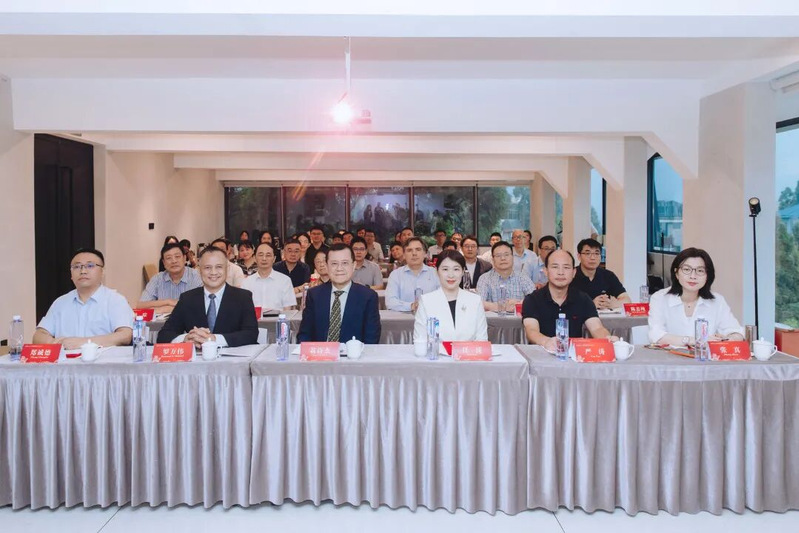
Fuzhou, July 30, 2026 — The International Academic Workshop on Cultural Integration in the Fujian Region and Mutual Learning among Maritime Silk Road Civilizations was successfully held in Fuzhou on July 27–28. The workshop was hosted by the Fuzhou Institute of Renmin University of China and the Mindu Historical and Cultural Research Center of Minjiang University (MJU), and organized by the School of History of Renmin University of China and the Mindu Culture Research Center of Renmin University of China, and co organized by the Academy of Regional and Country Studies of Renmin University of China and the Administrative Committee of the Fuzhou Guling Tourism Resort.
Scholars from leading Chinese universities and research institutions—including Renmin University of China, Fudan University, East China Normal University, Xiamen University, and the National Library of China—were joined by experts from Canada, Spain, Malaysia, and the Philippines. Overseas participants represented York University (Canada), Rey Juan Carlos University (Spain), Universiti Tunku Abdul Rahman (Malaysia), the Philippine Association for Chinese Studies, and the Asia-Pacific Belt and Road Joint Council.
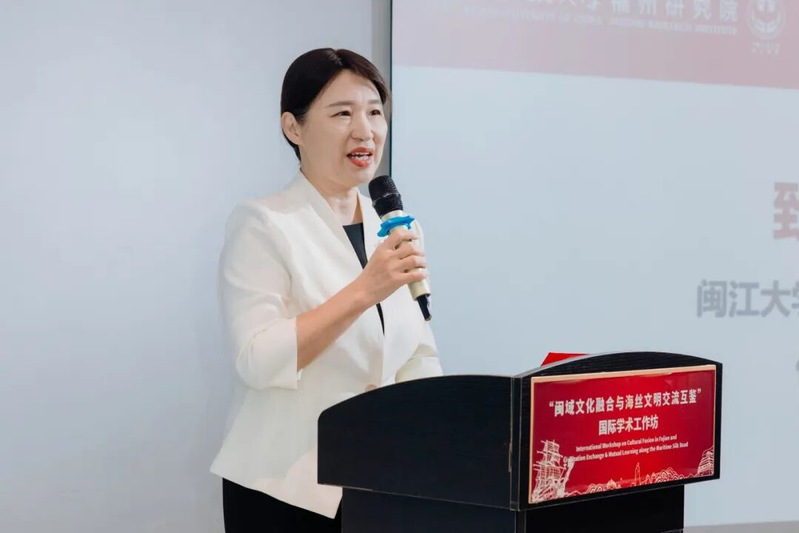
The opening ceremony took place at Guling, a historic hill resort in Fuzhou. Ren Tao, Deputy Secretary of the CPC Committee of Minjiang University; Lin Yu, Member of the Party Leadership Group andDeputy Director of the Administrative Committee of the Fuzhou Guling Tourism Resort; and Zheng Chengde, Vice Director of the Fuzhou Institute of Renmin University of China, delivered opening addresses.
In his remarks, Ren Tao noted that the workshop serves as an important platform for deepening collaboration between Renmin University of China and Minjiang University in the humanities and social sciences. The exchange, he said, connects local historical and cultural research with global academic perspectives, expands the international influence of Mindu (Fuzhou) culture, and injects fresh academic momentum into the preservation and development of Maritime Silk Road civilizations. As a university rooted in Fuzhou, MJU will continue its long-standing commitment to research on Mindu culture, Fujian–Taiwan culture, and Maritime Silk Road civilizations, providing scholarly support for Fuzhou's development into a modern international city.
Keynote presentations were delivered by Yang Cong, former Director of the Fujian Museum and adjunct professor at MJU; Professor Huang Chunyuan of East China Normal University; Rommel C. Banlaoi, Chairman of the Philippine Association for Chinese Studies; and Ong Tee Keat, President of the Asia-Pacific Belt and Road Joint Council. The speakers addressed frontier topics including prehistoric migration from coastal Fujian to Taiwan, the Fuzhou–Quanzhou twin structure of the Song Dynasty maritime Silk Road, the Philippines and the South China Sea maritime Silk Road, and transnational cooperation along the maritime routes.
The workshop also featured parallel sessions, where more than 20 scholars from China and abroad engaged in in-depth exchanges on five themes: Fujian regional culture and local society; the Maritime Silk Road and transnational exchange; historical and cultural ties between Fujian and Taiwan; overseas Fujianese migration and community development; and local documents and folk beliefs. Spanning from prehistory to the contemporary era, the themes encompassed perspectives and methods from archaeology, history, sociology, and documentary studies.
As the first international academic event jointly hosted by the Fuzhou Institute of Renmin University of China and the Mindu Historical and Cultural Research Center of MJU, the workshop marked a groundbreaking dialogue in integrating local cultural research in Fuzhou and Fujian into the international academic community. Going forward, the two institutions will continue to advance the study and interpretation of Fujian's cultural heritage and promote its international communication.